The missing provider encounter: why dental data belongs in the healthcare record
Dental offices run hundreds of millions of provider encounters a year. Count those visits as part of the healthcare data timeline and you can close care gaps, catch oral-systemic risk sooner, and coordinate patients better.
Healthcare talks about “whole-person care” as if the whole person shows up in one record. The whole person shows up in pieces: a primary care visit, a dental cleaning, a prescription refill, an urgent care visit, a mammogram, an emergency department visit, a behavioral health session, a lab result, a portal message. Each piece lands in a different system. Most of those systems cannot see one another.
Here is the question that matters. How many times a year does the US healthcare system get a real chance to update what it knows about a patient, and how many of those chances happen in dental offices, with data the rest of the system usually cannot see?
That is where dental matters. Not as a side benefit, and not as a consumer wellness category. It counts as one of the recurring provider encounters in the American patient year.
Encounters are sensors
A provider encounter is more than a billable event. It is a checkpoint.
At a good visit, someone updates medications, allergies, blood pressure, weight, pregnancy status, tobacco use, pain, infection, mobility, nutrition, mental health concerns, adherence problems, and whether the patient actually closed the referral loop from the last visit. The clinical system gets a fresh read on the patient.
Physician offices anchor that map. CDC reports roughly 1.0 billion physician office visits in 2019, or 320.7 visits per 100 people; about 50.3% of those visits were to primary care physicians (CDC FastStats). That is the central nervous system of outpatient medicine.
Dental volume runs large against that system. AHRQ MEPS reported 324.3 million office-based dental visits in 2021 among people age 2 and older, with an average of 2.3 visits among people who had any dental visit (AHRQ MEPS Statistical Brief 555). Dental office volume runs roughly one-third of all physician office volume, and roughly two-thirds of primary-care physician office volume. The comparison draws on different years and different survey systems, so treat it as directional rather than exact. The direction holds.
Dental is one of the places where the patient keeps showing up.
The encounter chart that changes the frame
Treat every provider encounter as a chance to update patient status, and the dental office reads as a major care-continuity node rather than an ancillary benefit.
The simplest chart is national encounter volume:
| Provider encounter type | Annual visits, millions | Relative to primary-care physician visits |
|---|---|---|
| All physician office visits | 1,000.0 | 199% |
| Primary-care physician office visits | 503.0 | 100% |
| Office-based dental visits | 324.3 | 64% |
| Emergency department visits | 155.4 | 31% |
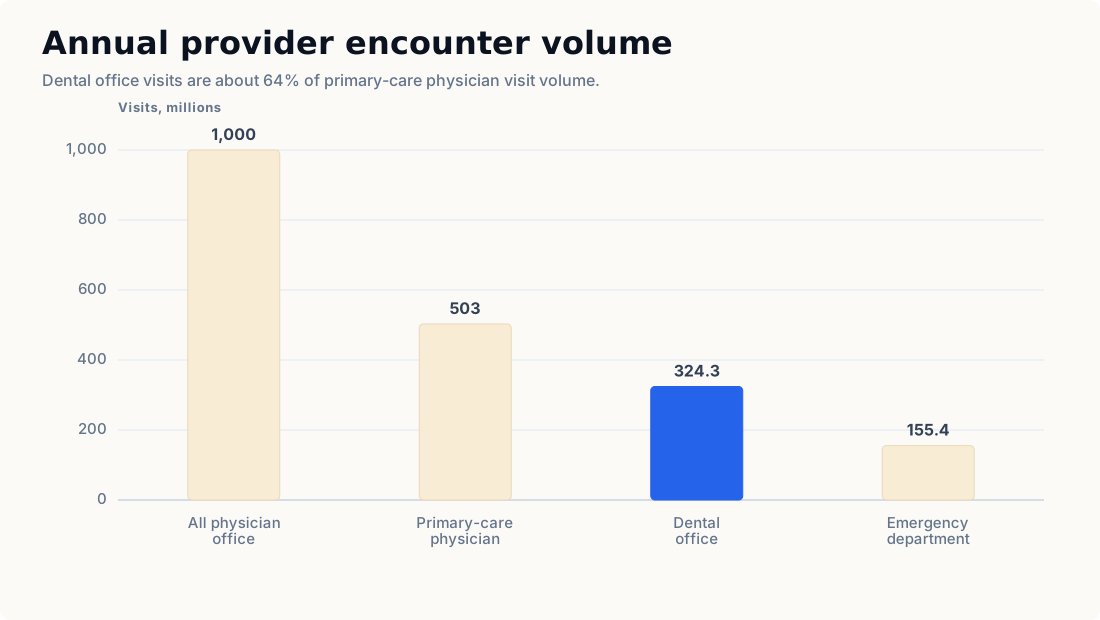
Dental office visits run below primary care in frequency, yet close enough to matter. Nationally, dental offices generate a visit volume equal to roughly 64% of primary-care physician office volume, using CDC’s 2019 physician office data and AHRQ’s 2021 office-based dental visit data. They also generate more than twice the national emergency department visit volume CDC reported for 2022.
The per-person opportunity view says the same thing:
| Provider encounter type | Encounters per 100 people | How to read it |
|---|---|---|
| All physician office visits | 320.7 | About 3.2 visits per person-year |
| Primary-care physician office visits | 161.3 | About 1.6 visits per person-year |
| Office-based dental visits | About 100.0 | About 1.0 visit per person-year when spread across the age 2+ population |
| Emergency department visits | 47.3 | About 0.47 visits per person-year |
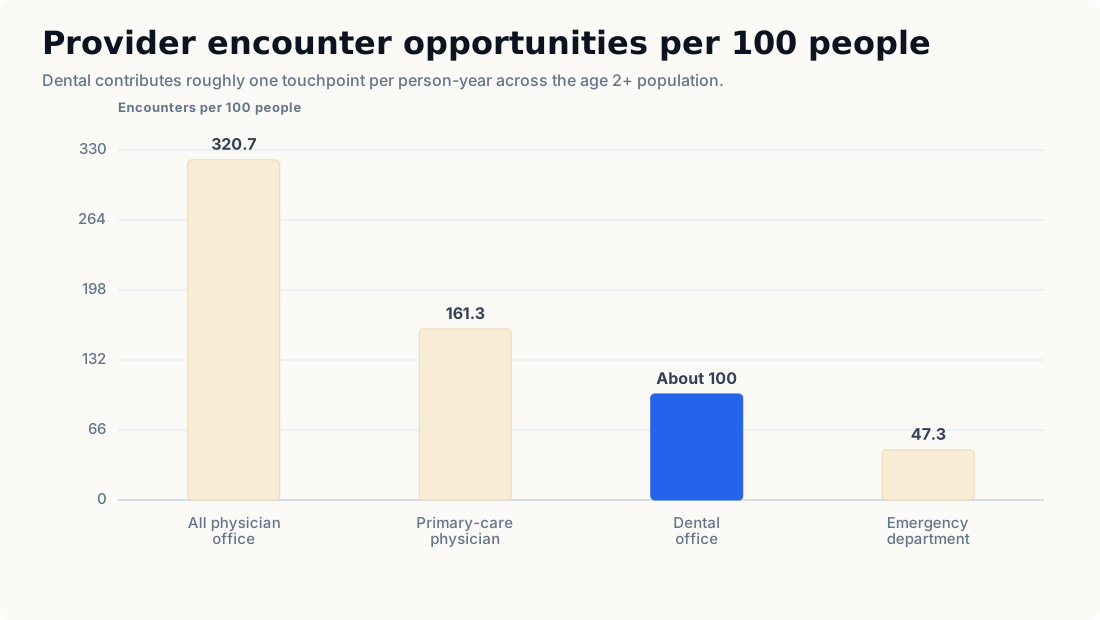
The care-coordination implication is practical. A dentist does more than clean teeth. Dentists evaluate medical histories, review medications, weigh anticoagulants and allergies, manage infection, prescribe antibiotics and pain medication, take blood pressure in many procedural contexts, and perform surgical procedures: extractions, implants, periodontal surgery, biopsies, sedation cases, and care that can interact with diabetes, pregnancy, cardiovascular disease, immunosuppression, osteoporosis medications, and oncology treatment.
The coordination question is not whether dentistry should become medicine. It follows from that work: a provider doing it should have current medical context. And the medical team should see clinically relevant dental findings before those findings become pain, infection, nutrition problems, or avoidable urgent care.
What unification adds: coverage and frequency
Connecting dental records to medical records buys two things. Coverage: more patients become visible at all. Frequency: patients already visible to medicine get more status updates across the year.
The coverage gain is measurable in public NHIS microdata. In the 2023 adult sample, weighted to the US adult population, 84.6% of adults had a doctor or other health professional visit in the past year. 65.7% had a dental exam or cleaning. Unify the two and 91.4% of adults had at least one of those touchpoints.
The dental-only group carries the point:
| Adult status, 2023 | Share of adults |
|---|---|
| Both medical contact and dental exam/cleaning | 58.8% |
| Medical contact only | 25.8% |
| Dental exam/cleaning only | 6.8% |
| Neither | 8.6% |
Dental added 6.8 percentage points of adult reach beyond broad medical-contact data alone. Among adults who did not report a past-year doctor or health professional visit, dental captured 44.4% of them.
The gain is largest among younger adults:
| Age group | Medical contact | Dental exam/cleaning | Unified reach | Dental-only gain |
|---|---|---|---|---|
| 18-34 | 76.1% | 62.6% | 87.0% | +10.9 pts |
| 35-49 | 80.8% | 66.2% | 89.5% | +8.8 pts |
| 50-64 | 88.3% | 67.9% | 93.2% | +4.9 pts |
| 65+ | 95.5% | 66.5% | 97.2% | +1.7 pts |
That age pattern matters. For younger adults, dental extends the healthcare system’s coverage. For older adults, medical contact already runs near-universal, so dental’s value shifts toward adding oral-health risk, medication, nutrition, infection, and procedure context to an already dense medical timeline.
Frequency is the second gain. A patient who sees a primary care physician once, goes to urgent care once, and has two dental visits creates four provider encounters across the year. In a siloed medical record, the dental half of that timeline goes missing.
| Patient year | Siloed medical view | Unified dental + medical view | Gain |
|---|---|---|---|
| Annual PCP + two dental recalls | 1 observation | 3 observations | 3.0x |
| PCP + urgent care + two dental recalls | 2 observations | 4 observations | 2.0x |
| Three physician visits + two dental visits | 3 observations | 5 observations | 1.7x |
| No medical visit + two dental visits | 0 observations | 2 observations | New coverage |
A connected system does not turn every dental visit into a full medical workup. It does know, more often, whether the patient is stable, in pain, infected, pregnant, hypertensive, diabetic, taking new medications, missing referrals, or approaching a procedure that changes risk.
Dental reaches people the medical record may not see often enough
Annual reach tells the same story from another angle. In 2024, 85.2% of US adults had a doctor or other health professional visit in the past year, and 80.8% had a wellness visit or general check-up according to NHIS (CDC/NCHS NHIS adult table).
Dental reach runs lower, and it still runs large. In 2023, 65.7% of adults reported a dental exam or cleaning in the past year (CDC/NCHS NHIS dental table). For children, the number climbs higher: America’s Health Rankings, using the National Survey of Children’s Health, reports 80.2% of children ages 1-17 had a preventive dental visit in 2023-2024 (America’s Health Rankings).
Dental reaches far more adults in a year than emergency departments, urgent care, or mental health counseling. NHIS puts adult emergency department reach at 20.7% in 2024 and urgent care or retail clinic reach at 31.6% in 2023; CDC’s 2024 mental health data brief puts adult counseling or therapy reach at 14.0% (NHIS ED table, NHIS urgent care table, CDC Data Brief 564).
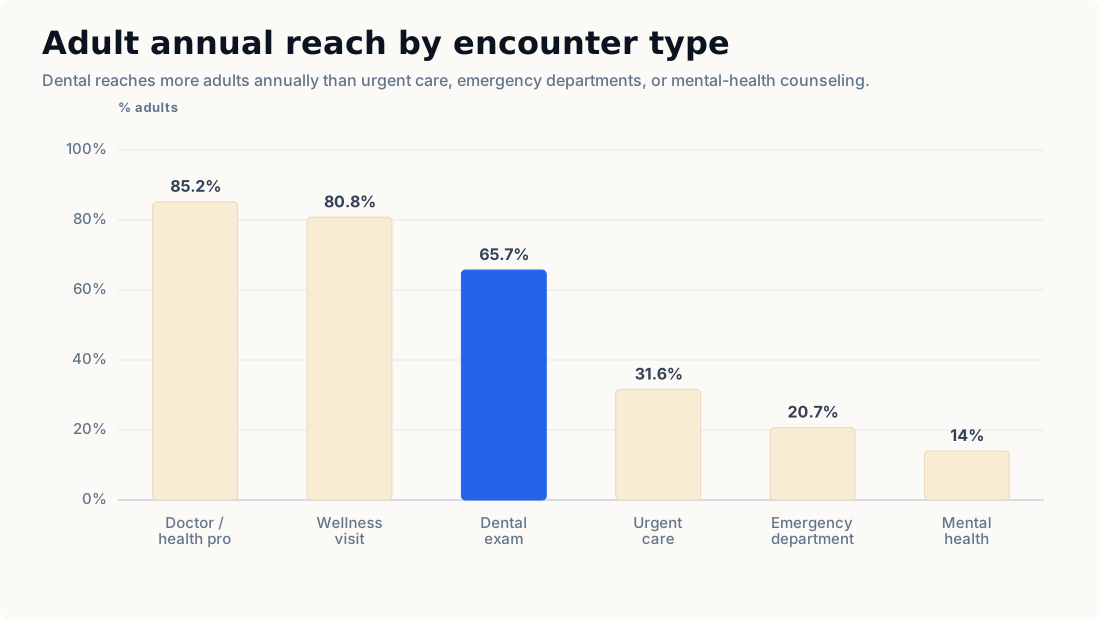
Dental sits alongside those settings as one of the most common non-physician places where a real provider sees a patient face to face, asks health questions, updates risk, and observes something about the body.
When that data goes missing from the medical record, the care team works with less than the full patient timeline.
The gap widens with age
The age pattern is the clearest warning signal.
Medical contact rises sharply as patients age. In 2024, NHIS reported doctor or health professional visits for 77.4% of adults ages 18-34, 80.6% ages 35-49, 88.9% ages 50-64, and 95.9% ages 65 and older (NHIS age table). That tracks with more chronic disease, more medication management, more screening, and more specialist follow-up.
Dental reach barely moves across those ages. In 2023, dental exam or cleaning reach was 62.7% for adults 18-34, 66.2% for ages 35-49, 67.9% for ages 50-64, and 66.5% for adults 65 and older (NHIS dental age table).
The coordination gap widens with each decade:
| Age group | Medical contact | Dental exam/cleaning | Gap |
|---|---|---|---|
| 18-34 | 77.4% | 62.7% | 14.7 points |
| 35-49 | 80.6% | 66.2% | 14.4 points |
| 50-64 | 88.9% | 67.9% | 21.0 points |
| 65+ | 95.9% | 66.5% | 29.4 points |
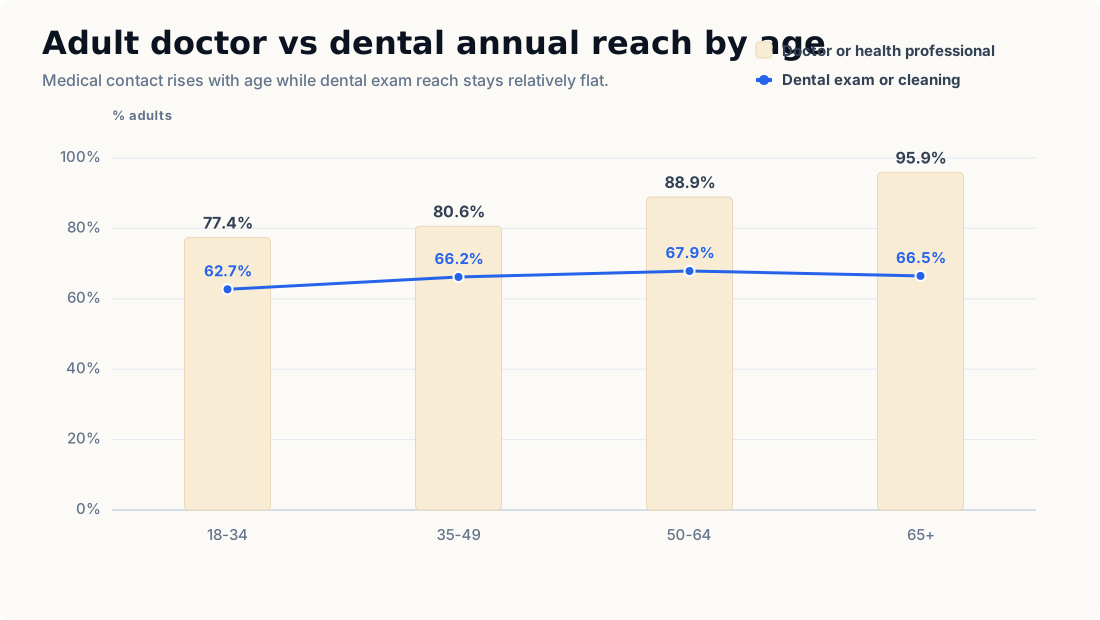
Bars show doctor or health professional reach; the line shows dental exam or cleaning reach.
The older patient is exactly where oral health, nutrition, diabetes, frailty, polypharmacy, dry mouth, anticoagulants, osteoporosis medications, dentures, infection risk, and planned procedures start to matter more. Dental contact stays flat while medical contact climbs toward universal. Traditional Medicare’s lack of routine dental coverage drives part of that gap. The operational point runs broader: medical care increasingly owns the older patient timeline, and dental risk stays partly outside the record.
So the system holds its densest patient data exactly where it has its biggest dental blind spot.
What the dentist knows that the physician may not
Dental records hold signals that matter to medicine:
- periodontal disease and bleeding patterns;
- recurrent abscesses or untreated infection;
- tooth loss, denture problems, chewing difficulty, and nutrition risk;
- xerostomia, medication side effects, and oral lesions;
- tobacco use, vaping, alcohol history, and oral cancer findings;
- blood pressure readings taken before procedures;
- antibiotic and pain-medication exposure;
- planned extractions, implants, sedation, or surgical procedures;
- dental avoidance driven by cost, anxiety, transportation, or coverage.
All of that belongs in the same universe as the rest of the record.
Take diabetes. A primary care physician may see rising A1c and medication nonadherence. The dentist may see periodontal inflammation, infection, dry mouth, and delayed healing. Each side holds part of the same patient story. Keep those facts separate and the system treats two problems. Connect them and the care team sees one deteriorating health pattern.
Or pregnancy. OB care may track gestational diabetes, hypertension, nausea, medication changes, and prenatal risk. Dental care may see gum inflammation, infection, pain, or deferred treatment. Make the dental record visible and oral health joins maternal care instead of drifting off as a separate errand.
Or oncology and cardiac procedures. A physician may need to know whether a patient has active oral infection before chemotherapy, transplant, immunosuppression, valve work, or other high-risk care. A dentist may need to know whether the patient is anticoagulated, immunosuppressed, medically fragile, or recently hospitalized. The coordination problem runs both directions.
What the physician knows that the dentist needs
The separation hurts dental teams too.
A dentist making treatment decisions needs the current medical context: diabetes, hypertension, anticoagulants, allergies, pregnancy, osteoporosis medications, immunosuppression, recent hospitalizations, cardiac history, substance-use risk, and medication lists. In many dental offices, that context still depends on a paper form, a patient memory test, or a phone call that may not happen before the appointment.
That is a safety and quality problem, not a technology inconvenience.
When dental and medical data sit disconnected, the dentist may not know that the patient’s medication list changed last month. The physician may not know the patient has an unresolved oral infection. The payer may not know that a dental pattern is predicting an avoidable emergency department visit. The patient becomes the integration layer, and the patient is the least reliable integration layer in the system.
The opportunity is timing, not volume
Healthcare data projects often fail because they collect information without changing decisions. Frame the dental-medical opportunity as a question instead. What decision improves because this encounter is visible?
Several candidates are immediate.
Care-gap detection. If a patient has not seen primary care but has seen a dentist twice, the dental encounter can trigger a medical care gap: blood pressure follow-up, diabetes screening, medication reconciliation, smoking cessation, overdue vaccines, or age-appropriate cancer screening.
Oral-systemic risk routing. If a patient has diabetes, pregnancy, immunosuppression, anticoagulation, or planned surgery, the medical record can flag dental risk before treatment. If the dental record shows infection, periodontal deterioration, or planned extractions, the medical team can see that risk before it becomes a complication.
Emergency department avoidance. Dental pain and oral infection often show up downstream in urgent and emergency settings, where definitive dental treatment is usually not available. Earlier visibility into unresolved dental needs can support routing to dental care before the ED becomes the default.
Older-adult outreach. Adults over 65 have near-universal medical contact and much lower dental reach. Medical systems can identify patients with diabetes, frailty, dry mouth, dentures, nutrition problems, or planned procedures who have not had dental care, then route outreach through care management instead of waiting for dental claims to appear.
Referral closure. If a physician tells a patient to see a dentist, or a dentist tells a patient to see a physician, the system should know whether that happened. Today, too often, it does not.
The missed opportunity is structural
The US healthcare system has spent years trying to make the medical record more complete. It has connected hospitals, specialists, labs, pharmacies, and increasingly behavioral health. Dental often stays outside that exchange, even though dental offices generate hundreds of millions of provider encounters and collect clinically relevant information on a recurring basis.
That exclusion distorts the picture of the patient. Medicine sees diagnoses, labs, procedures, medications, and utilization. Dentistry sees oral inflammation, infection, function, pain, avoidance, and procedure needs. The patient experiences those as one body. The system stores them as separate industries.
So the strategic question for dental care reaches past “how big is the dental market?” The sharper version: what becomes possible when dental is treated as part of the healthcare encounter network?
The answer is better orchestration:
- fewer blind spots between primary care and dental care;
- earlier detection of oral infection and chronic-disease risk;
- safer dental treatment because medical context is current;
- better medical treatment because oral-health context is visible;
- more complete care-gap analytics for payers and providers;
- more chances to update the patient record before the next high-cost event.
Dental matters in the broader healthcare system, and not because every dental visit is a medical visit in disguise. It matters because every dental visit is a real provider encounter with a patient who also belongs to the medical system.
Leave the data separate and those encounters stay underused. Connect it, and dental becomes one of the most practical additions to whole-person care: a recurring checkpoint, a risk signal, and a bridge between what the mouth shows and what the rest of the record needs to know.